
6 reasons it'd be in your BEST interest to send a follow up letter after applying for the job
1) You get to remind them why you're a great fit & show that you're committed to getting the job.
2) You have the opportunity to include specific wins that you have achieved at work since applying (or in general) that you would feel would be appropriate to share.
3) You're able to re-provide your application materials (i.e. your resume) & inform them that these materials are attached (this ensures they received your application).
4) You have the opportunity to ask questions about the position/application process (i.e. how long the interview process is & when they plan to have a candidate in the position by). Good rule of thumb: Ask 1-3 questions at most.
5) Let them know you want to discuss the position further and how they can reach you.
6) It can help you establish a connection with a company decision maker. Interacting with the person responsible for hiring new personnel can help you make a professional connection. Even if you don't get the role, this can be an opportunity to expand your professional network, which may be useful in the future.
2) You have the opportunity to include specific wins that you have achieved at work since applying (or in general) that you would feel would be appropriate to share.
3) You're able to re-provide your application materials (i.e. your resume) & inform them that these materials are attached (this ensures they received your application).
4) You have the opportunity to ask questions about the position/application process (i.e. how long the interview process is & when they plan to have a candidate in the position by). Good rule of thumb: Ask 1-3 questions at most.
5) Let them know you want to discuss the position further and how they can reach you.
6) It can help you establish a connection with a company decision maker. Interacting with the person responsible for hiring new personnel can help you make a professional connection. Even if you don't get the role, this can be an opportunity to expand your professional network, which may be useful in the future.

Are you submitting a follow up letter within 2 weeks after you apply for the position?
This is a letter that you write addressing the hiring manager or recruiter, informing them the purpose of your writing (following up on the status of your job application including the position), expressing your interest in the position & why, what you really like about the position (including any article ideas you have, if applicable), stating you've attached your resume (and of course attaching your resume if you're sending this letter via email or including it if it's not via email), thanking them for their time, expressing that any update is greatly appreciated, & conclude the letter.
This follow up letter can be sent via email to the same email/person you may have submitted for the job, or you may have to do more work (i.e. research online, the company website, etc. to get information on where to send) for an email address to send this follow up letter to (ensuring it's addressed to the appropriate person). You may have to call the company during their regular business hours to get this information asking who you'd send your follow up letter to or you may have to send to their snail mail address on their website where their headquarters is addressed to the hiring person at that company, at their "Contact" form on their website, etc.
This follow up letter can be sent via email to the same email/person you may have submitted for the job, or you may have to do more work (i.e. research online, the company website, etc. to get information on where to send) for an email address to send this follow up letter to (ensuring it's addressed to the appropriate person). You may have to call the company during their regular business hours to get this information asking who you'd send your follow up letter to or you may have to send to their snail mail address on their website where their headquarters is addressed to the hiring person at that company, at their "Contact" form on their website, etc.
By the way, a recent small win for me
Remember in my last newsletter when I mentioned how I submitted for an SEO writer position? Within one week from submitting my application for that position (I did what I said I was going to in my cover letter & followed up with them on the status of my application the following week [including the date & how I would follow up with them]). As I was working on getting my 3 letters of recommendations from clients recommending me for this position, I received a congratulations email from them informing me that the next steps in the hiring process were writing assessments such as: providing them 2 of my best writing samples that were relevant to them, answering how long it'd take me to write a 1,000 - 1,500 word article, and a 1-2 paragraph writing assignment so that they could get a feel for my style and tone. They had a deadline for me to submit this things and I replied back first to their email (as soon as possible within a couple hours of receiving) letting them know I would be able to complete this before their deadline (as they requested). I then did what I said I was going to and submitted the assignment when I said I would. I also then had 2 email addresses (contacts) to send my 3 letters of recommendations from clients (the 2 people who were on my email for the writing assessment). I had then asked my clients to wait to submit their letters of recommendation for me until after that deadline (that my writing assessments were due) so that these decision makers could look at my writing assessments first. I mentioned in the email to them with one letter of recommendation that I submitted for one client how many letters to expect & the details (i.e. one was sent earlier by "X" person, here's another one a client wrote for me earlier this year, & the other one from "X" person will be sent at "X" time) and communicated that these letters were intended for them to get to know a little bit more about me that a resume, cover letter, or writing assessment could not and were not intended to pressure/rush them for a decision & I thanked them. Why send the letters of recommendation still if I was already moved to the first stage of the hiring process you may ask? Because I don't have the job yet, so letters of recommendation should be sent BEFORE you move onto the first stage of the hiring process or not. (If you've been following my newsletter, letters of recommendation was something I came up with as standing out & getting the job [not something I researched] & it worked in the past for landing me 2 jobs, not interviews, but jobs! 😀)
The earliest I would follow up with them again would be a week later from when I last communicated with them (unless I hear back from them first).
The earliest I would follow up with them again would be a week later from when I last communicated with them (unless I hear back from them first).
Purchase a follow up letter NOW AND BEFORE 11:30 pm PST Wed. 7/31/24 when my registration form automatically closes
I can write your follow up letter (approximately a page to no more than a page & a half are ideal), along with a discussion/email from you with all the details so that I can write this letter as well as a set of edits per the final follow up letter, and all formatting including (i.e. font types, font sizes, bolds, italicizes, underlines, highlights, links if applicable), as well as a subject title for your email so that you can forward from your own email account OR copy to a LinkedIn message is all for $212.40 which includes my newsletter's payment processor fees & my newsletter's fees so that I can net my $200 rate. (If you want to pay outside of newsletter without a debit/credit card & with U.S. cash or money order, it would be $200 per follow up letter you wanted to purchase & read to the bottom of this section of my newsletter that discusses "If you want to pay outside of newsletter without a debit/credit card..." 4th paragraph down from here).
Here's the link (click on here) to the document (PDF) for the terms & conditions for the follow up letter purchase (I can no longer put on a landing page after you click on the "event registration form" like I could with my newsletter's old event registration system).
Here's the link to take you directly to my registration page to purchase your follow up letters: 👇https://lp.constantcontactpages.com/ev/reg/f4amej5
PLEASE BE SURE TO FOLLOW THE VERY EASY & QUICK INSTRUCTIONS (THEY ARE PROVIDED IN DETAIL) FOR ALMOST ANYONE TO UNDERSTAND TO SUCCESSFULLY PROCESS YOUR PAYMENT ORDER (after visiting my above registration page link). Thank you! 🙏🙂
If you want to pay outside of newsletter without a debit/credit card & with U.S. cash or money order, the deadline to purchase & terms & conditions still apply. You'd have to print off my terms & conditions document, sign & print your full name, date, & state that you understand & will abide by the terms & conditions AND then scan and email me ALL pages of the terms & conditions document NOT just your signed page. Then you'd have to visit a Harborstone Credit Union (there are locations in other cities than Puyallup, WA that may be of convenience to you) & visit them as soon as possible after submitting me your signed terms & conditions document during Harborstone's hours of operation to pay for your follow up letter/(s) with U.S. cash with a teller to "Carly Calabrese's Work Solutions (business account)." You don't need any other information to make this deposit including my account number. You'd send an email to me at: [email protected] confirming this visit/transaction after it was completed. You can always opt to snail mail your payment to me, but I don't make my mailing address public, so you'd have to email me for it. You could then snail mail the printed off & signed terms & conditions document & include with your payment. Please ensure to budget for extra time for snail mail to arrive (even if you're local to the Puyallup, WA area) as delays can occur even during non-high volume mail times (i.e. Christmas time) & you may miss the mail pick up time when you put it in the mail meaning it wouldn't go out until the next mail pick up business day. Thank you! As mentioned before, if you've never emailed me before/got a new email address, etc. to ensure your email gets to me & NOT in my SPAM folder, you can always opt to email me through my website form since it goes directly to my inbox here: http://www.worksolutionstoday.com/contact.html Thank you! 🙏
Here's the link (click on here) to the document (PDF) for the terms & conditions for the follow up letter purchase (I can no longer put on a landing page after you click on the "event registration form" like I could with my newsletter's old event registration system).
Here's the link to take you directly to my registration page to purchase your follow up letters: 👇https://lp.constantcontactpages.com/ev/reg/f4amej5
PLEASE BE SURE TO FOLLOW THE VERY EASY & QUICK INSTRUCTIONS (THEY ARE PROVIDED IN DETAIL) FOR ALMOST ANYONE TO UNDERSTAND TO SUCCESSFULLY PROCESS YOUR PAYMENT ORDER (after visiting my above registration page link). Thank you! 🙏🙂
If you want to pay outside of newsletter without a debit/credit card & with U.S. cash or money order, the deadline to purchase & terms & conditions still apply. You'd have to print off my terms & conditions document, sign & print your full name, date, & state that you understand & will abide by the terms & conditions AND then scan and email me ALL pages of the terms & conditions document NOT just your signed page. Then you'd have to visit a Harborstone Credit Union (there are locations in other cities than Puyallup, WA that may be of convenience to you) & visit them as soon as possible after submitting me your signed terms & conditions document during Harborstone's hours of operation to pay for your follow up letter/(s) with U.S. cash with a teller to "Carly Calabrese's Work Solutions (business account)." You don't need any other information to make this deposit including my account number. You'd send an email to me at: [email protected] confirming this visit/transaction after it was completed. You can always opt to snail mail your payment to me, but I don't make my mailing address public, so you'd have to email me for it. You could then snail mail the printed off & signed terms & conditions document & include with your payment. Please ensure to budget for extra time for snail mail to arrive (even if you're local to the Puyallup, WA area) as delays can occur even during non-high volume mail times (i.e. Christmas time) & you may miss the mail pick up time when you put it in the mail meaning it wouldn't go out until the next mail pick up business day. Thank you! As mentioned before, if you've never emailed me before/got a new email address, etc. to ensure your email gets to me & NOT in my SPAM folder, you can always opt to email me through my website form since it goes directly to my inbox here: http://www.worksolutionstoday.com/contact.html Thank you! 🙏
My latest Covid support & awareness blog posts:
Below is a screenshot of what it looks like at my recent blog post NOT a direct link to it so clicking on the image below will NOT take you there. 👇

To read the rest of my blog post (above), you'd have to visit this link: https://corona-virus-awarenessandsupport.blogspot.com/2024/07/another-way-to-fight-covid-more.html
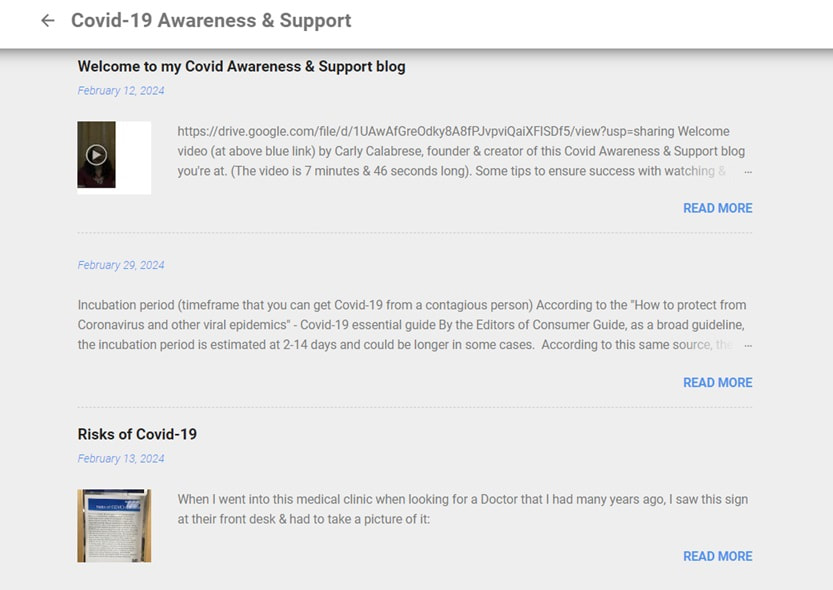
To read other popular posts from my Covid awareness & support blog
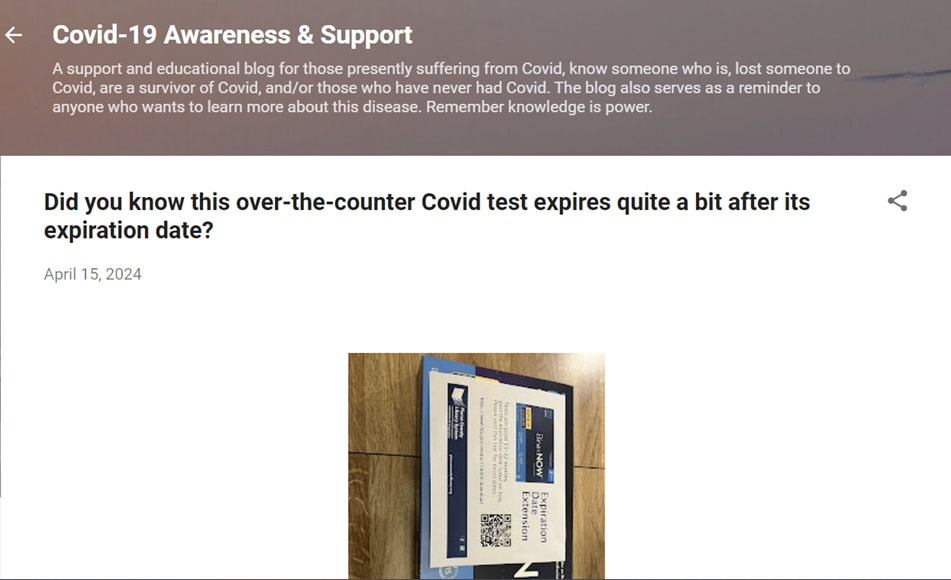
Visit the (above)👆 link for my recent post and click the left arrow button (only arrow next to the header at the top of my page discussing the blog's purpose) OR visit: https://corona-virus-awarenessandsupport.blogspot.com/ and see them all.
Once there, don't forget to click the "READ MORE" blue text in the bottom right-hand corner of each blog post when you visit the above link to see my whole post.
Below is just a screenshot of what it looks like at my blog NOT a direct link to it so clicking on the image below will NOT take you there. 👇
Once there, don't forget to click the "READ MORE" blue text in the bottom right-hand corner of each blog post when you visit the above link to see my whole post.
Below is just a screenshot of what it looks like at my blog NOT a direct link to it so clicking on the image below will NOT take you there. 👇

To read the above screenshot blog post visit: https://corona-virus-awarenessandsupport.blogspot.com/2024/07/another-obvious-way-to-eliminate.html

Please follow me on my blog. Steps to do so are here:
1. Sign into Blogger.com (it's free to create/have a blogger.com account).
2. In the left menu, click Reading list.
3. In the top right, click Manage reading list.
4. Click Add.
5. Type "corona-virus-awarenessandsupport.blogspot.com" to follow. Please note those are dashes in my blog's web address and NOT underscores.
6. Click Next.
7. Choose whether to follow publicly or anonymously.
8. Click Follow.
2. In the left menu, click Reading list.
3. In the top right, click Manage reading list.
4. Click Add.
5. Type "corona-virus-awarenessandsupport.blogspot.com" to follow. Please note those are dashes in my blog's web address and NOT underscores.
6. Click Next.
7. Choose whether to follow publicly or anonymously.
8. Click Follow.
I'd also love it if you would make productive & appropriate comments to my posts at this blog. To post comments, you would click the "Post a comment" button right below my post OR clicking in the "Enter a comment" box which is also at the bottom of my post. I've enabled it so that even those who don't have Google accounts can post comments. 🙂
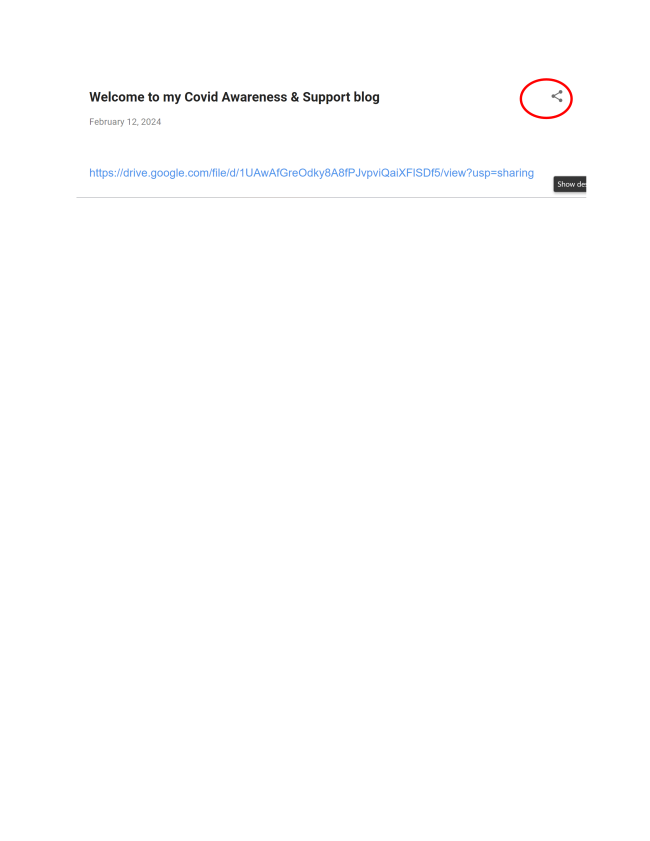
When you are at my blog, you can share my posts (individually if you want to share a specific one) to someone else by clicking the sideways triangle with circles at the end in the upper-right hand corner of the post. I've provided a screenshot below with a red circle around the "Share" button that I'm referring to. Once you click on that button, it gives you options to get the link to my post, or share the post via Facebook, Twitter, Pinterest, or email it directly to someone.
Thank you in advance for supporting my blog and I in the ways that I listed (above). 🙂🙏
When you are at my blog, you can share my posts (individually if you want to share a specific one) to someone else by clicking the sideways triangle with circles at the end in the upper-right hand corner of the post. I've provided a screenshot below with a red circle around the "Share" button that I'm referring to. Once you click on that button, it gives you options to get the link to my post, or share the post via Facebook, Twitter, Pinterest, or email it directly to someone.
Thank you in advance for supporting my blog and I in the ways that I listed (above). 🙂🙏
Thank you,
Carly Calabrese
I help unhappy/unchallenged professionals land their dream career (whether it's starting a business or otherwise)
Email me: [email protected]
NOTE: If you've never emailed me before/got a new email address, etc. to ensure your email gets to me & NOT in my SPAM folder, you can always opt to email me through my website form since it goes directly to my inbox here: http://www.worksolutionstoday.com/contact.html
Work Solutions - "Providing career assistance/coaching/prep, business marketing, writing, editing, and LinkedIn services for individuals and freelance opportunities."
“Never let the fear of striking out stop you from playing the game."--Babe Ruth
Carly Calabrese
I help unhappy/unchallenged professionals land their dream career (whether it's starting a business or otherwise)
Email me: [email protected]
NOTE: If you've never emailed me before/got a new email address, etc. to ensure your email gets to me & NOT in my SPAM folder, you can always opt to email me through my website form since it goes directly to my inbox here: http://www.worksolutionstoday.com/contact.html
Work Solutions - "Providing career assistance/coaching/prep, business marketing, writing, editing, and LinkedIn services for individuals and freelance opportunities."
“Never let the fear of striking out stop you from playing the game."--Babe Ruth





 RSS Feed